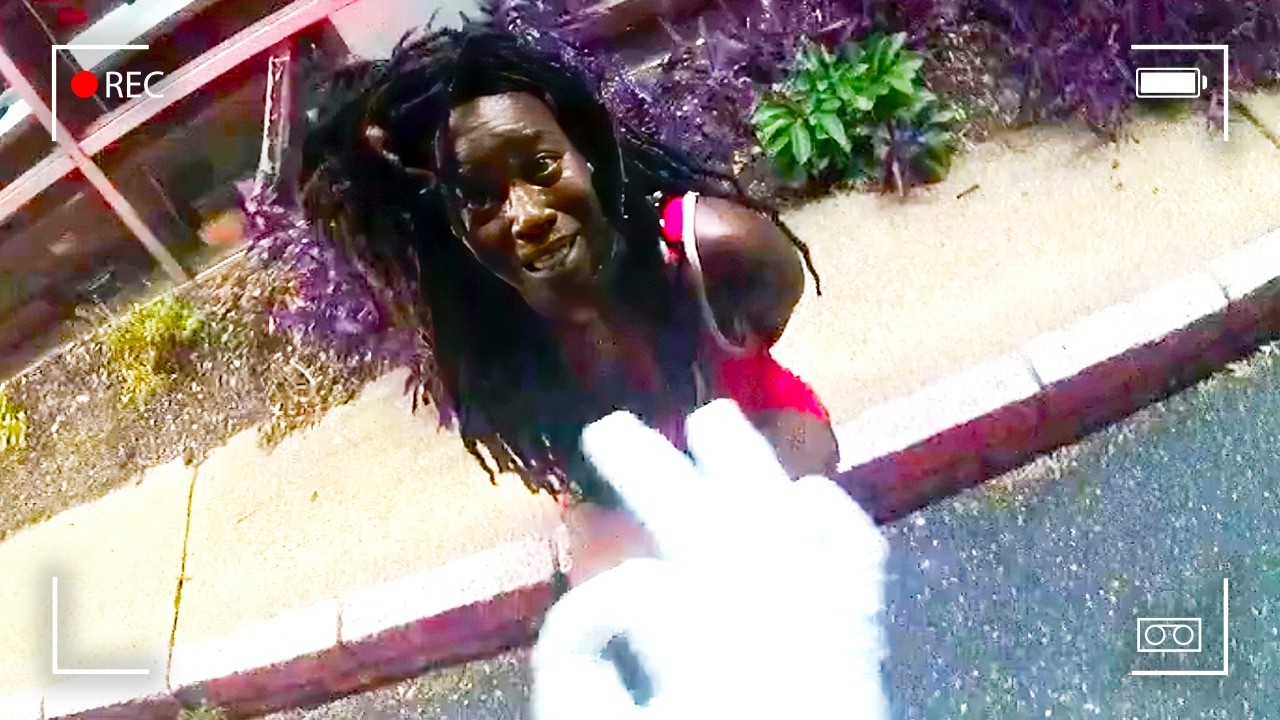
$1300 Walmart Theft Explodes Into an All Out Brawl
A $1,300 Theft Turned Into a Brawl. I Was Standing Right There, Doing Nothing.
I am the woman in the gray polo standing near the registers in that video, watching the whole thing happen and not moving. The comments have opinions about me. Useless. Coward. Probably in on it. Somebody worked out what my job title is and decided that made it worse.
I was doing exactly what twelve years of training and one very specific corporate policy required me to do, and the nineteen year old who did move is the one who got hurt, and then got fired, and then got called a hero by people who had no idea she lost her job that same week.
My name is Verlie and I work in asset protection at a big box store. I am not going to name the chain. The policy I am about to describe is not unique to any one of them.
Let me start with the number in the headline, because it is not random.
Thirteen hundred dollars matters because it sits above the felony threshold for retail theft in my state. Under it, in most places, you are looking at a misdemeanor. Over it, the charge changes category entirely, and so does everything downstream, and people who steal for a living know exactly where that line is.
The crew that hit us that day knew. They always know. They know the threshold better than most of the officers who respond, and they load carts to a specific value, and they will put something back if the total is climbing past a number they do not want to cross.
That is the first thing people get wrong about this. They picture a desperate person taking something they cannot afford. That happens, constantly, and I have handled hundreds of those, and they almost never turn into anything.
What was happening that day was not that. It was a boosting operation, which means organized resale, and the man in the video was the disposable end of it.
Here is how my job actually works, and this is the part that generates the comments.
I cannot touch anyone. I do not mean that as a general principle. I mean it is written down, and it is a fireable offense, and it applies to me even though loss prevention is literally my department.
Most large retailers now operate on some version of a non apprehension or hands off policy. Depending on the company it may allow a narrow exception for trained specialists under strict conditions, but the default for the overwhelming majority of staff, including most of us in AP, is observe, document, report, do not engage.
People assume that policy exists to protect merchandise. It does not. It exists because a store got sued, or somebody died.
An apprehension that goes wrong kills people. A customer who trips. An employee who takes a blow to the head against a tile floor. A subject who has a medical event during a struggle. All of these have happened in this industry, repeatedly, and the settlements are catastrophic, and the human outcomes are worse than the settlements.
So the policy is not cowardice. It is a company having done the arithmetic on what a stolen television costs versus what a dead teenager costs, and having reached the only sane conclusion.
The trouble is that the policy protects the company and the employee, and it is completely invisible to the customer standing in aisle nine watching a man walk out with two carts.
Which brings me to what actually caused the brawl.
The thief did not start it. I want that very clear, because the video title says the theft exploded into a fight and the sequence implies the man swung on somebody.
Two customers decided to intervene.
They were not being malicious. I have thought about this a lot and I believe they were doing what they genuinely thought was right. They saw a man taking thirteen hundred dollars of merchandise past the registers, and they saw a store employee standing there not stopping him, and they filled the gap.
One of them got a hand on the cart. The other got in front of the doors. And a man who had been calmly walking out was suddenly a man who was cornered, and cornered people fight, and it went from a theft to a physical altercation in about four seconds.
Then more people joined, because that is what happens, and now there were six adults in a scrum in front of a set of automatic doors with a family with a stroller eleven feet away.
That is the brawl in the video. It was not created by the theft. It was created by the response to the theft.
And I stood there, because if I had gone in, I would have escalated it further and I would have been terminated by the end of the shift, and neither of those things would have gotten the merchandise back.
I got on the radio. I called it in with a description that was, and I say this without pride because it is just my job, extremely good. Height, build, clothing, tattoos, the vehicle, the plate, direction of travel. That is the actual work.
Then Tansy went in.
Tansy Oyelaran was nineteen years old. She had been on registers for about five months. She was small and quick and she had the specific fearlessness that people have at nineteen before anything has ever gone properly wrong for them.
She saw two customers getting hit and she came around her lane and she went in, and she got a shoulder into the middle of it, and she took a fall onto the floor with someone's weight on top of her.
She broke her wrist. It was a bad break, the kind that needs hardware, and she is left handed and it was her left wrist.
The video ends about there. That is where every version of it cuts.
Here is what happened after.
Store management, meaning Doug Vanhoose, who is not a villain and who I have worked with for six years, did what the policy required him to do, which was to document a violation of the non engagement policy by an associate.
Tansy was terminated. It took nine days.
She was also, during those same nine days, being called a hero on the internet by about four hundred thousand people who had watched a nineteen year old girl get taken to the floor and thought it was the most inspiring thing they had seen all week.
Nobody in those comments knew she had been fired. Nobody in those comments knew she was nineteen with a broken wrist and no income, and that the injury happened in a way the company was arguing fell outside the scope of her duties, which is a sentence I want you to read twice.
I want to be careful and fair here, because the easy version of this article makes Doug the villain and the company a monster.
The policy that got Tansy fired is the same policy that exists because a different nineteen year old somewhere else got killed doing exactly what she did. It is a bad rule that produces terrible outcomes and it exists because the alternative produced worse ones.
Both of those things are true and I have not been able to get them to stop being true no matter how many times I turn them over.
What I can say is that the company enforced its policy against a teenager with total consistency and total speed, and has never once, in twelve years, moved with that kind of speed on anything that would have made the store safer.
We had asked for a second AP position at that location for three years. We had asked for a door greeter position that was not seasonal. We had asked for the receipt check station to be staffed at closing.
All of that costs money, and none of it happened, and a nineteen year old cashier filled the gap with her body and then was terminated for it.
Now the part about the man himself.
He was identified. My description and the plate did their job, and a detective named Ori Blanchard picked him up about six weeks later on an unrelated stop.
He was charged. He was one of at least four people working that operation across a wide area, hitting stores on a rotation, and he was the one who walked in the door, which means he was the one who took all the risk for the smallest cut.
The person who organized it, who received the goods, who ran the resale, was never charged with anything. As far as I know that individual is still operating. That is the normal outcome in these cases and every AP professional reading this is nodding right now.
We catch the hands. We almost never catch the head. The hands are usually somebody with a substance problem or a debt or a record that makes ordinary employment impossible, and there is an endless supply of them, and the person running it knows that.
So the arrest, which felt like the ending, changed nothing about the operation. They hit a store two counties over about a month later.
Here is what I would ask of you, and it is the reason I agreed to write any of this.
Do not intervene in a retail theft. I know exactly how that sounds coming from a person in a gray polo who stood still. I am asking anyway.
You do not know what is in that person's waistband. You do not know whether they are in withdrawal, whether they are armed, whether they will fight like a cornered animal because they are on their third strike. Employees do not know either, which is exactly why we are told not to touch anyone.
The merchandise is insured. It genuinely is. Nobody in that building loses their home because a cart went out the door, and no employee's job is contingent on you stopping it, and I promise you that no manager anywhere wants you to get hurt over inventory.
What is actually useful is the thing that feels like doing nothing.
Get a description. Not a vague one. Height relative to a door frame, build, hair, facial hair, distinguishing marks, what exactly they were wearing including shoes, which people always forget. Shoes are the thing people do not change.
Get the vehicle and the plate if you can do it from a safe distance without following anyone. Do not follow anyone. Following is how bystanders end up in parking lot confrontations, and it is the single most common way a witness becomes a victim.
And then find an employee and tell them, and give your name.
That last one matters more than everything else combined. A theft with a good witness statement is a chargeable case. A theft with grainy overhead footage and nobody willing to be named is a report that goes into a pile.
Almost everyone films. Almost nobody gives a name. I have watched twenty people record an incident and had zero of them stay to make a statement, and the video from all twenty phones was worth less to the detective than one person willing to sign something.
Tansy is twenty two now. Her wrist works, mostly. There is weather she can feel coming.
She works in a veterinary office and she is happier than she was on registers, and she says that without bitterness, and I still cannot say the word hero about her without something happening in my throat.
She and I had lunch about a year after. I told her I was sorry that I did not move, and she told me, without any hesitation at all, that she was glad I did not, because if I had gone in it would have been two of us on that floor instead of one.
I have thought about that more than almost anything else anyone has said to me in twelve years.
So here is the whole thing, as plainly as I can put it.
The theft was thirteen hundred dollars and it was going to be thirteen hundred dollars whether anybody moved or not. The brawl was created by people trying to help. The person who actually got hurt was the youngest and lowest paid person in the building, and she was fired for it, and cheered for it, in the same week, by two completely different audiences that never learned about each other.
And the man who organized all of it has never spent a night anywhere.
The footage is below. Watch it, and watch the timestamps at the doors, and notice that nothing violent happens until the moment somebody decides to be a hero.
Full Video
Comments (0)
Loading comments...
May You Like

Suzuki GSXR Takes Georgia State Patrol On 130MPH Pursuit !
WHEN BIKERS FIGHT BACK! | CRAZY BIKER MOMENTS

The Moment Mom With 1yo Baby Finds Out Husband’s Sick Secret
Latest Posts
Popular Posts
WHEN BIKERS FIGHT BACK! | CRAZY BIKER MOMENTS
Sep 12, 2026
Simple Trespass Incident Takes a Horrifying Turn
Sep 12, 2026