
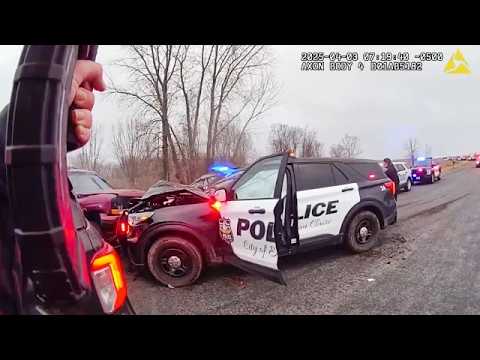
Cops Pull Over Speeding Woman, Find Decomposed Kids in Trunk
Scroll down to get the original video link.
How a Routine Traffic Stop Can Save a Life
Most traffic stops are exactly what they look like. A broken tail light, a rolling stop, someone drifting eleven miles an hour over the limit on a road they drive every day. The officer writes it up, everyone goes home, and nothing about it is memorable. That is the ordinary version, and it is the overwhelming majority of them.
But a traffic stop is also one of the few moments in modern life when a stranger looks directly at a car, at the people inside it, and at how they are behaving together. That brief contact has recovered missing children, located people named in alerts, and interrupted situations that had gone unnoticed for weeks. Not because of dramatic police work, but because someone was finally close enough to notice.
That is the useful part for the rest of us. The thing that makes those stops work is not a badge. It is proximity and attention. Anyone sitting at a gas pump, working a drive-through window, or stuck in traffic beside another vehicle has the same view an officer gets, and sometimes for much longer than the officer ever does.
So what actually draws attention. One common signal is a passenger who seems unable or unwilling to speak for themselves, where another person answers every question directed at them. Another is a passenger who appears fearful, disoriented, or afraid of the person they are with. Both are patterns that public safety agencies list in their awareness materials.
Other things worth noticing are a child who seems distressed or unresponsive in a way that does not match their age, someone who does not appear to know where they are going or where they came from, or a person who looks like they have been living in the vehicle. Any single one of these can have a completely innocent explanation. That matters, and it is worth remembering.
Which brings up the most important part of all of this. You are not being asked to investigate anything, confront anyone, or decide whether a crime is happening. Doing any of that can make a bad situation worse and put you in danger. Your entire job as a bystander is to notice, write down what you saw, and hand it to someone whose job it is.
That means calling 911 if something looks urgent, or the non-emergency line if it does not. Give a location, a vehicle description, a plate if you have one safely, and a plain factual account of what you observed. Do not follow the vehicle. Do not film a confrontation. Do not approach.
People hesitate because they are afraid of being wrong and wasting someone's time. Dispatchers hear that apology constantly, and it is unnecessary. A report that turns out to be nothing costs an officer twenty minutes.
The other outcome costs far more, and nobody, including trained officers, can reliably tell the difference from the outside. That is exactly why the system depends on people reporting the small strange thing rather than deciding in advance that it is probably nothing.
Comments (0)
Loading comments...
May You Like
Woman Discovers Kidnapped Girl in Her Garage
Cop Loses It During Road Rage Incident
BEST OF ROAD RAGE| Most Insane Dashcam Videos of the YEAR
Latest Posts
Popular Posts

WHEN BIKERS FIGHT BACK! | CRAZY BIKER MOMENTS
Sep 12, 2026
Simple Trespass Incident Takes a Horrifying Turn
Sep 12, 2026
Woman Discovers Kidnapped Girl in Her Garage
Sep 12, 2026