Nurse Arrested for Fentanyl After a Speeding Stop: A Florida Legal Analysis
A headline like this one turns up somewhere in Florida every few months. A nurse is pulled over for speeding, something is found in the car, and the arrest report lists a fentanyl charge. The comment section decides the case in about four minutes.
The actual legal situation is considerably more complicated than the headline, and it runs on two completely separate tracks at the same time. One is criminal. The other is professional licensing. They have different rules, different timelines, and different standards of proof, and the second one usually moves faster than the first.
An important disclaimer before anything else. I am not an attorney and this is not legal advice. This is a general explanation of how Florida law treats this category of case, written for people who keep seeing these headlines and want to understand the machinery behind them. Anyone actually facing this needs a Florida criminal defense attorney and, separately, a professional licensing attorney.
Let us walk through it in the order it actually happens.
Stage one: the stop itself
A traffic stop requires reasonable suspicion of a traffic violation. Speeding, observed by an officer or measured by radar or lidar, clears that bar easily. This is the least contested part of almost every one of these cases.
What matters legally is not whether the stop was valid but how long it lasted and what justified each step after the initial reason was resolved.
Under federal constitutional law that Florida courts apply, a traffic stop may last only as long as reasonably necessary to complete the mission of the stop. That mission is the ticket. Checking the license, running the tag, writing the citation. Once those tasks are done or reasonably should be done, the authority for the seizure ends.
An officer cannot extend the stop to investigate something unrelated unless independent reasonable suspicion has developed during the lawful portion. This is the single most litigated issue in cases that begin as a speeding stop and end as a drug arrest.
So the first real question in a case like this is a timeline question. When was the citation written or ready. What happened between that moment and the search. Was a K9 unit already present, or did it arrive eleven minutes later while the driver waited.
Defense attorneys in these cases spend enormous energy on dashcam and bodycam timestamps for exactly this reason. A search that produces a genuinely incriminating result can still be suppressed if the seizure that produced it was unlawfully prolonged.
Stage two: how a speeding stop becomes a search
There are only a handful of doors through which a search happens in a roadside case, and it is worth knowing which is which because they have very different vulnerabilities.
Consent. The driver agrees. This is by far the most common and it is the one that surprises people most, because a substantial fraction of roadside searches happen simply because the person said yes when they did not have to. Consent must be voluntary, and its scope can be limited and withdrawn, but proving involuntariness after the fact is difficult.
Plain view. Something incriminating is visible from a lawful vantage point. An officer looking through a window at what is on a seat is not conducting a search at all.
Probable cause under the automobile exception. If an officer has probable cause to believe the vehicle contains contraband, the vehicle may be searched without a warrant. Probable cause has to come from somewhere articulable, and in a fentanyl case it is often a combination of observations rather than a single fact.
K9 alert. A dog sniff of the exterior of a lawfully stopped vehicle is not itself a search, but the stop cannot be extended to wait for the dog without independent reasonable suspicion. The reliability and certification records of the specific animal are also discoverable and are frequently challenged.
Search incident to arrest and inventory search. If the driver is arrested for something else, different rules open up, including an inventory of the vehicle before it is towed, conducted under standardized department policy rather than investigative discretion.
In the specific scenario in the headline, there is one more factor that is unique to healthcare workers, and it cuts in a direction people do not expect.
A nurse may be carrying items that look alarming and are entirely lawful. Scrubs, a badge, a bag with medical supplies. That context can cut both ways in the probable cause analysis, and how an officer articulates it in the report matters a great deal later.
Stage three: the charge, and why the word trafficking is not what you think
This is the part that produces the most public confusion, and it is the most important thing in this entire article.
In Florida, fentanyl trafficking is a weight-based offense. It does not require any proof of selling, distribution, or intent to distribute. Under Florida Statute § 893.135(1)(c)4, knowing actual or constructive possession of four grams or more is enough to charge trafficking, and the state never has to show the person intended to sell anything at all.
Four grams. That is the entire threshold, and it is dramatically lower than the thresholds for most other controlled substances.
Then there is the mixture rule, which is where these cases become genuinely brutal. Florida weighs the entire mixture, not the pure fentanyl within it. Counterfeit pills, cutting agents, and fillers all count toward the four gram line, which means a person holding what they believed was a small personal quantity can be charged identically to a distributor.
That combination, weight-based charging plus whole-mixture weighing, is why someone with no distribution evidence whatsoever can face a first degree felony.
Below the trafficking threshold, simple possession of fentanyl is charged under § 893.13 and is a third degree felony, which is a different universe of exposure. So the difference between a few tenths of a gram in a lab report can be the difference between a probationary outcome and a mandatory prison term.
The penalties, and a real conflict in the sources
Here is where I have to be careful, because the publicly available information is not consistent and anyone researching this should know that.
Many Florida criminal defense sites still list the older mandatory minimum structure for fentanyl trafficking: three years and a fifty thousand dollar fine for four to fourteen grams, fifteen years and a hundred thousand dollar fine for fourteen to twenty eight grams, and twenty five years and a five hundred thousand dollar fine for twenty eight grams or more.
Other sources, including more recently updated ones, report that CS/CS/HB 1359, effective October 1, 2023, raised fentanyl trafficking to the harshest tier in Florida law, with mandatory minimums of seven years for four to fourteen grams, twenty years for fourteen to twenty eight grams, and twenty five years above that.
Both sets of numbers are being published by law firms right now. The statutory maximum in either case is thirty years, since this is a first degree felony.
I am not going to pretend to resolve that discrepancy in a general article. What I will say is that anyone dealing with this in reality should be reading the current text of § 893.135 itself rather than any summary, including this one, because the fentanyl provisions have been amended more than once in recent years.
The mechanically important point survives either version. A mandatory minimum means a judge cannot go below it. Not for a first offense, not for a nurse with a spotless record, not for a person who is plainly an addict rather than a dealer.
There are only two common paths below a mandatory minimum. The prosecutor can waive it as part of a negotiated resolution, or the defendant can provide what the statute calls substantial assistance to law enforcement. Both are entirely within the state's discretion.
The knowledge element, and the affirmative defense
Florida is unusual here and it is worth understanding.
Under § 893.101, Florida eliminated knowledge of the illicit nature of a substance as an element the state must prove. Instead, lack of knowledge of the illicit nature is an affirmative defense that the defendant must raise.
Practically, this means the state proves possession and weight. If the defense is that the person did not know what the substance was, that has to be affirmatively raised and supported, and a jury instruction on it follows.
This matters enormously in the counterfeit pill era. A person who believed they had oxycodone pills and in fact had pressed fentanyl is in a legally precarious position, because the mixture weight is what it is regardless of what they thought they were holding.
The second track: the nursing license
This is the part that most coverage of these arrests ignores entirely, and for the person involved it is often the more immediately devastating of the two proceedings.
The Florida Department of Health can act long before any criminal case is resolved. The State Surgeon General has authority to issue an Emergency Suspension Order, which stops the nurse from practicing immediately if the state concludes the person represents an immediate danger to public health, safety, or welfare.
There is no hearing before an ESO takes effect. It is served, and practice stops that day. The person does have the right to challenge it through an expedited proceeding at the Division of Administrative Hearings, but they are not working in the meantime.
Practitioners in this area describe allegations involving diversion of controlled substances or impairment as being handled on a fast track, with the investigation completed on a compressed schedule and an ESO considered close to automatically.
There is also a statutory hook tied directly to conviction. Under § 893.11, a person convicted of trafficking is subject to emergency suspension of any Florida professional license authorizing the practice of a profession or trade.
Note what that means in sequence. The licensing consequence can arrive early, on the strength of an allegation and an investigation, and again at conviction, and the administrative case runs on its own clock which frequently takes a year or more.
IPN, and why it is not a simple choice
Florida has a monitoring program for nurses called the Intervention Project for Nurses, established by legislation in 1983. It is not a state agency, and it functions as an alternative pathway for practitioners with impairment issues.
For some nurses, participation is effectively mandatory. For others it is presented as voluntary, often suggested by an employer or raised as a way to avoid or soften licensing action.
It is not a light commitment. Monitoring agreements commonly run multiple years, with required evaluations, drug testing, therapy, and group sessions, and the participant pays for all of it. Practitioners in this field report participants spending very substantial sums over the course of a three year agreement.
There is also a sequencing trap that licensing attorneys warn about repeatedly. Self reporting, submitting to an evaluation, or signing paperwork before getting advice can generate documentation that later drives the disciplinary case. Anything signed goes somewhere.
None of that is an argument against the program. For a nurse who genuinely is struggling with substance use, a monitoring pathway can be the difference between a career that resumes and one that ends. It is an argument for getting licensing counsel before making the first move, not after.
What defenses actually look like in a case like this
Suppression is the biggest one, and it goes back to stage one. If the stop was unlawfully prolonged, or the consent was not voluntary, or the K9 deployment cannot be justified on the timeline, everything found afterward can be challenged.
Weight is the second. Because the entire case can turn on the four gram line, lab methodology, scale calibration, whether packaging was included, and whether legally irrelevant material was weighed into the total are all live issues rather than technicalities.
Constructive possession is the third, and it comes up constantly in vehicle cases. If the substance was not on the person, the state has to establish knowledge of its presence and the ability to exercise control over it, and a shared or borrowed vehicle complicates that considerably.
For a healthcare worker specifically, there is an additional factual dimension that is not available to most defendants. Nurses have lawful professional contact with controlled substances. Whether a given quantity is consistent with diversion, with a lawful prescription, or with something else entirely is a fact question that pulls in employment records, dispensing logs, and workplace chain of custody documentation.
That evidence often lives with an employer rather than with the defendant, and obtaining it is its own project.
Why these two tracks pull against each other
Here is the tension that makes these cases genuinely difficult, and it is worth stating plainly.
The best move in the criminal case is usually silence. Say nothing, produce nothing, force the state to prove its case.
The licensing process rewards something closer to the opposite. Cooperation, evaluation, documented treatment, engagement with monitoring. A nurse who goes silent for eighteen months while a criminal case grinds forward may find the administrative case has already been decided against them.
Anything said in the administrative track can be relevant in the criminal one. This is precisely why the standard advice from practitioners in this area is not to handle one and then the other, but to have both sets of counsel coordinating from the beginning.
The practical takeaways
For anyone reading this as general knowledge rather than as a person in trouble, a few things are worth carrying away.
A speeding stop is a lawful stop, and the fight is almost never about whether the officer could pull the car over. It is about what happened in the minutes after and whether each step had its own justification.
You are not required to consent to a search of your vehicle, and declining is not evidence of anything. A very large share of roadside searches happen on consent alone.
Trafficking in Florida is a weight, not a business model. The word in the charge does not mean what the public thinks it means, and the mixture rule means the number on the scale is frequently much larger than the amount of actual drug involved.
And for licensed professionals of any kind, the license proceeding is a separate emergency with its own clock, and it can end a career while the criminal case is still in its early stages.
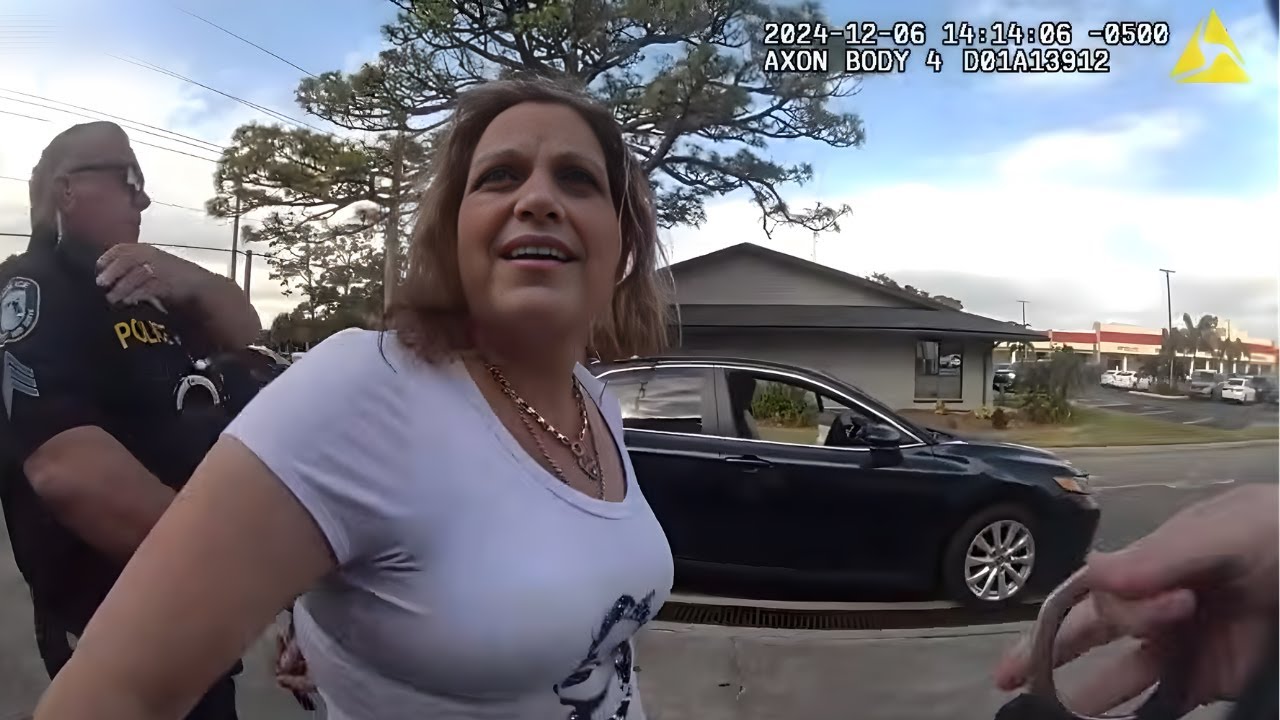
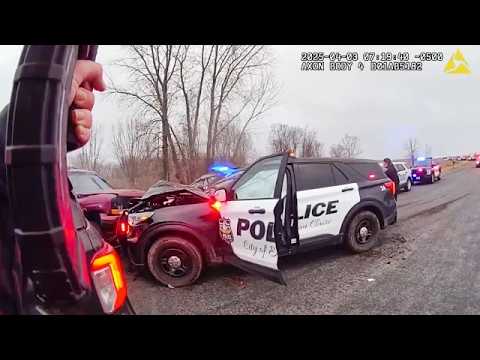
The video of the stop is below. Watch the timestamps rather than the drama, because in a case like this the timestamps are usually the whole case.
Full Video