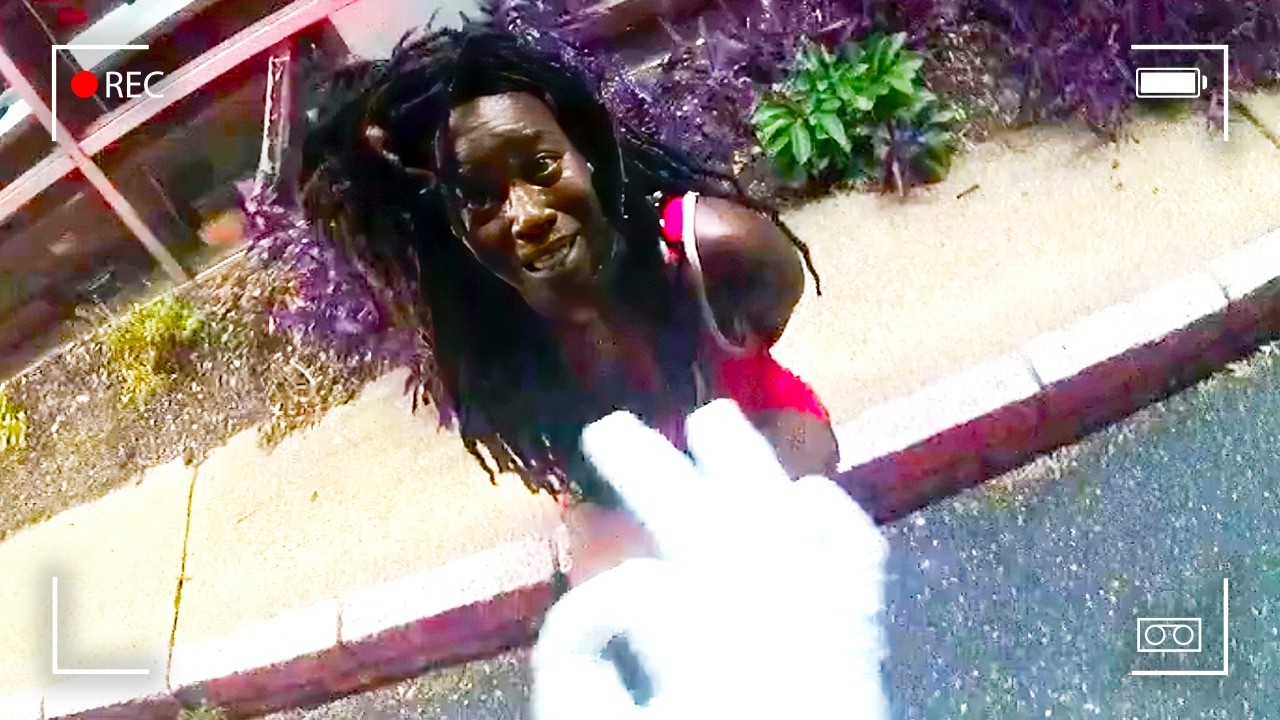
2 Hours Of BIKERS FIGHT BACK CRAZY KARENS
I Built Those Two Hour Compilations. Here Is Everything I Never Told You.
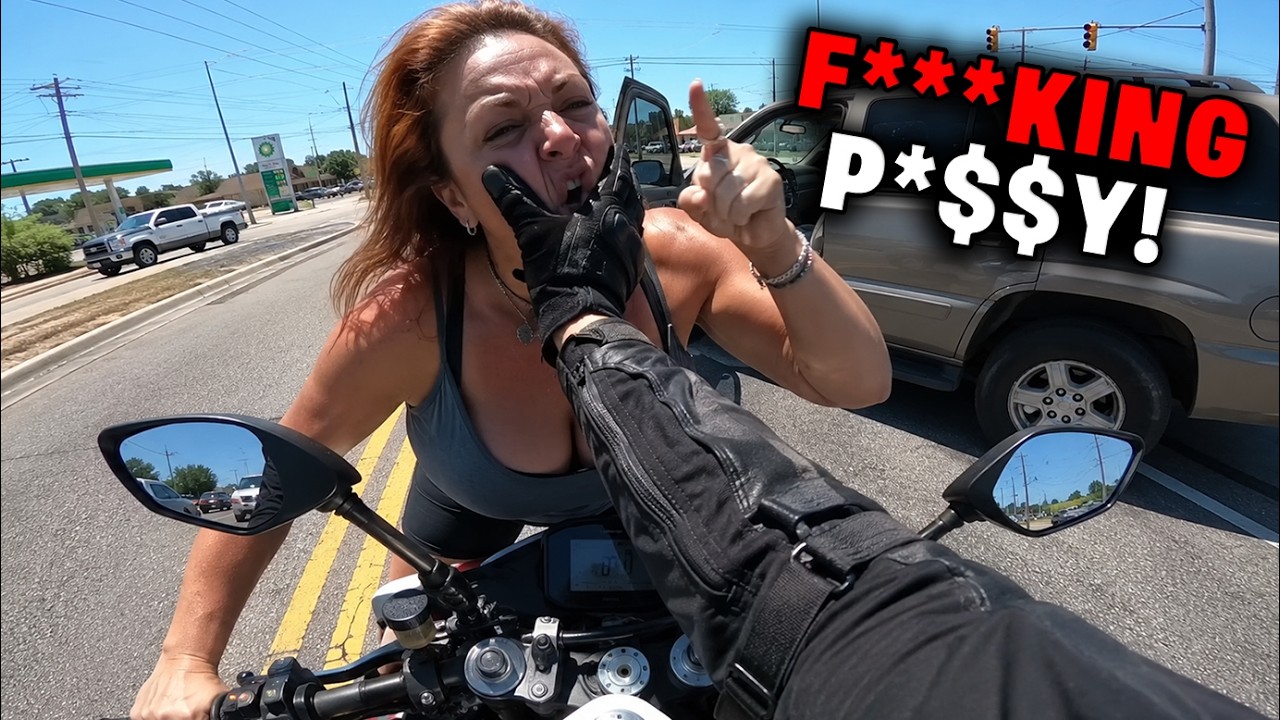
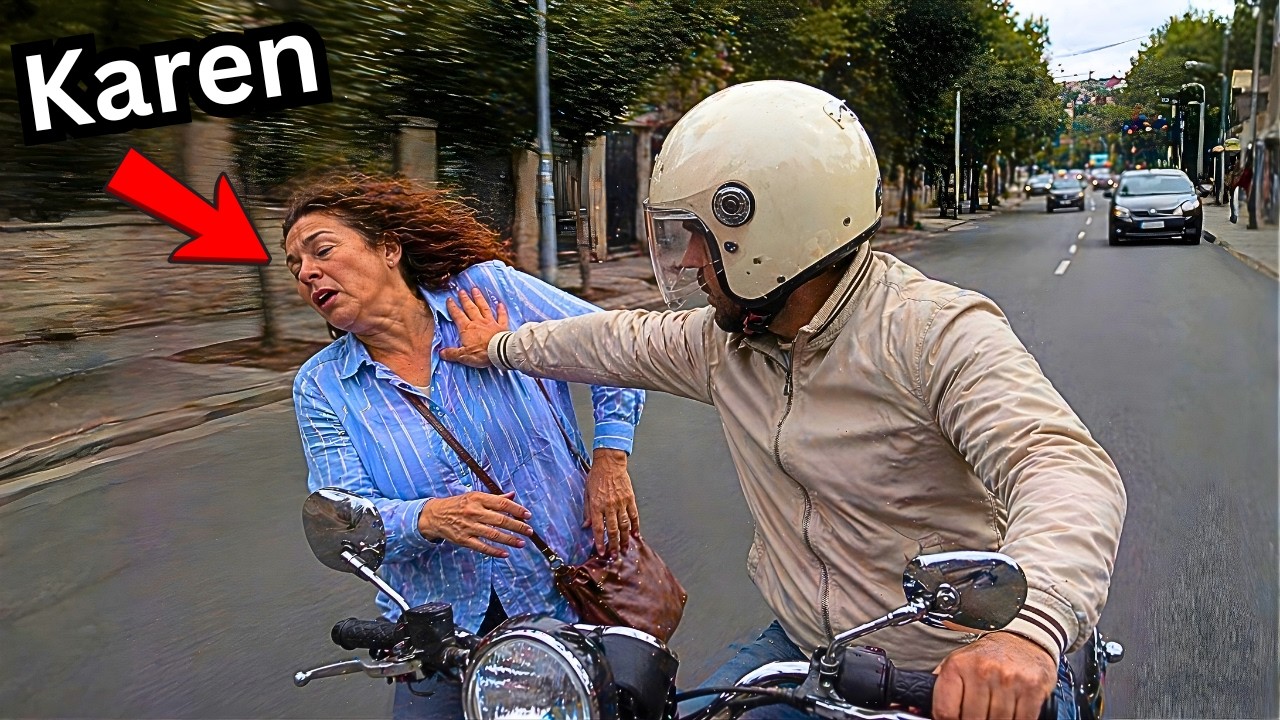
I made those videos for three years. Two hour compilations, bikers versus Karens, forty clips stitched end to end under a thumbnail of a woman caught mid scream with a red circle drawn around her face. At my peak I was uploading four a week across two channels. I want to walk you through exactly how they are built, because I do not think most people watching understand what they are actually looking at.
My name is Rowan, I am twenty nine, and I got into this the way most people get into anything now, which is that I needed money and a stranger on the internet offered me some. I was doing freelance video work, mostly wedding highlight reels and small business ads, and it had dried up almost completely over one very bad winter.
A guy named Mackey Doyle found me in a forum where editors trade work. He ran a small network of channels, six or seven at the time, and he needed people who could cut fast and did not ask questions. The pay was per finished video and it was better than what I had been making, which was nothing at all.
His pitch was simple. He said the footage was free, the audience was already there, and all I had to do was learn the shape. I asked him what the shape was. He told me I would understand after my third video, and he was right, and I have thought about that sentence a lot since.
Here is the first thing you need to know, and it is the thing that surprises people most. Almost nothing in those compilations is filmed by the person uploading it. The clips are scraped from social platforms, reposted, downloaded, re-encoded, and passed between channels until nobody involved has any idea where anything originally came from.
I have used the same twenty second clip in eleven different videos under six different titles. Same footage. Completely different framing each time depending on where I chose to start it and what I put in the thumbnail. That is not an exaggeration or a confession of some unusual sin. That is a normal Tuesday in this business.
Because the craft, and I use that word carefully, is not in the editing. It is in the choosing. You start the clip where the confrontation is already at full volume. Whatever came before, the thing that would let a viewer decide who was actually in the wrong, is dead weight. Context flattens engagement. It is that simple and that ugly.
I never had to lie about anything. I want to be precise here, because people hear this and assume there is fabrication involved. There is not, usually. There does not need to be. All I ever did was pick a starting frame, and the starting frame did all the lying for me, and it did it without a single false statement.
The label in the thumbnail does the second half of the work. Once you write that word over a woman's face, the audience has already decided before the first second of footage plays. They are not watching to find out what happened. They are watching to confirm what the thumbnail told them, and the video only has to not contradict it.
I have labeled women that way who were, as far as I could tell from twenty seconds of footage, upset for reasons that seemed pretty reasonable. Someone nearly clipped their car. Someone was revving an engine outside a house at eleven at night. Did not matter. The label held, because labels always hold, and nobody in the comments has the original clip.
The two hour runtime is not an artistic choice either. Longer videos mean more ad breaks. More ad breaks mean more revenue per view. And nobody watches those the way you watch a film, which is the part the format depends on entirely. They run in the background while people do dishes or fall asleep.
That is why the fortieth clip performs almost identically to the first one. By minute ninety, nobody is really looking. The video is furniture. It is ambient outrage playing in a room, and the specific human beings in it have long since stopped registering as human beings to anyone still in the tab.
Mackey taught me the rules over about six months, in messages, never on a call. Never use a clip where the woman is crying, because sympathy kills the click. Never use a clip where the rider is clearly the aggressor, unless you cut before he moves. Always cut the apology if there is one. There is very often an apology.
That last rule is the one I would put on my headstone if I were being honest about how I spent my twenties. There is very often an apology. Somebody backs down. Somebody puts a hand up. Somebody realizes they were wrong and says so, and it happens far more than the internet believes, and it is the first thing to hit the cutting room floor.
Because an apology is a resolution, and a resolution is an ending, and an ending gives the viewer permission to stop watching. The whole machine runs on unresolved anger. You leave them slightly unsatisfied at the end of every clip so their thumb never quite lands on the back button.
I got good at it. That is the part I have the hardest time with. I was not a bad editor doing a stupid job badly. I was very good at a job that I now think should not exist, and I was proud of my thumbnails, and I had opinions about pacing, and I got a small raise after eight months because my retention numbers were better than the other editors'.
The first crack came about two years in, and it was not a moral awakening, it was a message request from a stranger.
Her name was Nell. Her mother was in one of my videos, about ninety seconds in, screaming at a rider in a pharmacy parking lot. I had captioned that segment with the word entitled and the word meltdown, and I remember it specifically because the audio was good and I had used it as the second clip, which is the position you give to your strongest early hook.
Nell told me her mother had dementia. She had been diagnosed fourteen months earlier. On the day of that clip she had driven herself to a pharmacy she had used for thirty years and had come out and been unable to find her car, and the rider had parked in a spot she believed was hers, and she had gotten frightened and confused and loud.
Everything that read as entitlement in that clip was, according to her daughter, fear. She was not asserting anything. She was disoriented in a parking lot and could not find her words and was shouting at the nearest person because the nearest person was the only thing she could focus on.
I sat with that message for two days before I answered it.
Then I did the only thing I could think of, which was to go into my own video, cut that segment out, and re-upload. It took me about twenty minutes. I felt better for roughly an hour, and then I did a reverse search on the clip and found it live in nine other compilations on channels that were not mine.
That is the thing nobody tells you about this industry, and it is the thing I most want people to understand. Once a person becomes content, they do not stop being content. There is no central place to remove yourself from. The clip is not in one location. It is in hundreds, held by people you cannot find, in countries you cannot reach.
Nell had already tried. She had filed reports on three platforms and gotten one clip removed. She told me that in her message, not as a complaint, just as context. She said she had mostly given up and had written to me because mine was the only one where a real name was attached to the channel.
I told her the truth, which was that I could remove one instance and nothing more. She thanked me anyway. That thank you sat in my chest for about a year and a half and it is a large part of why I am writing this at all.
But it was not what made me quit. What made me quit was Emmitt.
Emmitt Yarrow was a rider in the southeast who appeared in a lot of the footage in circulation. He was in my videos probably thirty times over two years, and he was, in the language of the audience, a legend. He had a distinctive helmet, he was funny, and he stayed calm in confrontations in a way that made the other person look worse by comparison.
He was, in the arc of these compilations, the hero. Every genre needs one. The angry woman is the antagonist and the calm rider is the protagonist, and Emmitt had accidentally become the face of an entire category of video that he had never asked to be in and, as far as I could tell at the time, was not being paid for.
Here is what I watched happen to him over about eighteen months, in his own uploaded footage, which I was scraping and cutting the whole time.
At first he was just a guy with a camera on his helmet who happened to have things happen to him. Then he started getting recognized. Then his own uploads started getting longer, and the confrontations in them started getting a little sharper, and he began doing something you can see very clearly if you watch the footage in chronological order, which almost nobody does.
He started performing.
He would stay in a situation slightly longer than he needed to. He would ask a question he already knew the answer to, because it would provoke a better response. He was not manufacturing anything outright, at least not early on. He was just no longer trying to defuse things, because defusing things had stopped being what got him seen.
I watched a man learn, in real time, that his de-escalation was worth nothing and his escalation was worth a great deal. Nobody sat him down and taught him that. The numbers taught him. The comments taught him. And the compilations, which is to say people like me, taught him most of all, because we only ever selected the sharp ones.
He got hurt eventually. Not catastrophically, and I am not going to detail it because it is his and I have already used enough of his life without asking. He also picked up charges out of an incident that, if you watch the full clip, he could have driven away from in the first fifteen seconds. Two years earlier, he would have.
That was the point where I could no longer maintain the story I had been telling myself. I had been operating on the idea that I was just an editor, that the footage existed with or without me, that I was a passive link in a chain. And then I watched the chain reach back and reshape a man's behavior until it broke something in his life.
The compilations did not just misrepresent the women in the thumbnails. They also built a hero and then rewarded him, week after week, for becoming someone worse. Both sides of that war were being fed by the same machine, and the machine did not care which one of them got hurt.
And then I found out something that made the whole thing much simpler to understand.
Mackey's network ran channels on both sides.
I had assumed, in a lazy way, that we were the biker channels and that somewhere out there were rival Karen channels run by other people with an opposing audience. That is not what was happening. The same operation ran drivers versus reckless bikers compilations, using the same scraped footage, cut the other direction, with the thumbnails reversed.
Same clips. Same twenty seconds. One version framed the rider as a menace filming his own crimes. The other framed the woman as unhinged. Both monetized, both feeding autoplay, and in at least one case that I found and verified myself, both containing the identical piece of footage with two different starting frames.
There was no side. There was never a side. There was an audience segment that liked to be angry at women in parking lots and an audience segment that liked to be angry at men on motorcycles, and one small company selling ad inventory against both of them, from the same folder of stolen video.
When I understood that, the entire moral architecture I had built for myself collapsed in about four seconds. I had told myself I was on the reasonable side of a real cultural argument. I was not on a side. I was inventory management.
I quit two weeks later. I want to be honest and say that I did not quit dramatically, and I did not report anyone, and I took my final payment. I am not the hero of this story. I made money on it for three years and I stopped when I could no longer avoid thinking about it, which is the most ordinary version of a conscience there is.
I wrote to Emmitt. He did not answer for four months and then he did, and we talked for a long time, and he was much less angry at me than I expected and much angrier at himself than I thought was fair. He said the thing that has stayed with me most, which was that he did not notice it happening.
He said it felt like being popular. He said the version of himself that showed up in those videos was slightly braver and slightly funnier than the real one, and that he started trying to be that guy on the road because that guy got the views. And that by the time he understood what he was doing, it was already a habit and not a choice.
I think about that in relation to Nell's mother too, from the other direction. One woman lost control of her own image because of a medical condition she did not choose. One man lost control of his because of an incentive he did not notice. Neither of them consented to being in a two hour video, and both of them are still in it, permanently, forever.
I do something else now. It is boring and it involves spreadsheets, and I am not going to pretend I have found redemption in a career change. What I do that matters is much smaller. I answer messages from people who find themselves in compilations and I tell them exactly how the system works, which platforms actually respond, and what is realistically possible.
Which is not much. That is the honest answer. You can usually get one or two instances removed. You cannot get yourself out of the ecosystem. I tell people that up front now, because the cruelest thing I could do is let them think there is a form to fill out that ends it.
So here is what I would ask, and it is not that you stop watching. I am aware of how that would sound coming from me.
Ask yourself what the first twelve seconds were.
Every clip you see was chosen by somebody, cut by somebody, and titled by somebody, and every one of those three decisions was made by a person whose income depends on you feeling something specific in the next four seconds. That person might have been me. For three years, quite often, it was.
The woman in the thumbnail might be exactly what the title says she is. Some of them are. But some of them are lost in a parking lot with a condition their family has not told anyone about yet, and there is genuinely no way to tell those two apart from behind a phone, and the format is specifically designed so that you never have to try.
And the rider you are cheering for might be in the process of being turned into somebody he would not recognize, one clip at a time, by the applause.
The footage from that day is below. Watch it if you want. Just watch it knowing what was cut, and who decided where it started.
Comments (0)
Loading comments...
May You Like

Suzuki GSXR Takes Georgia State Patrol On 130MPH Pursuit !
When Professional Wrestlers Decide to Fight Back!
When Road Ragers Messed With The Wrong Person
Latest Posts
Popular Posts
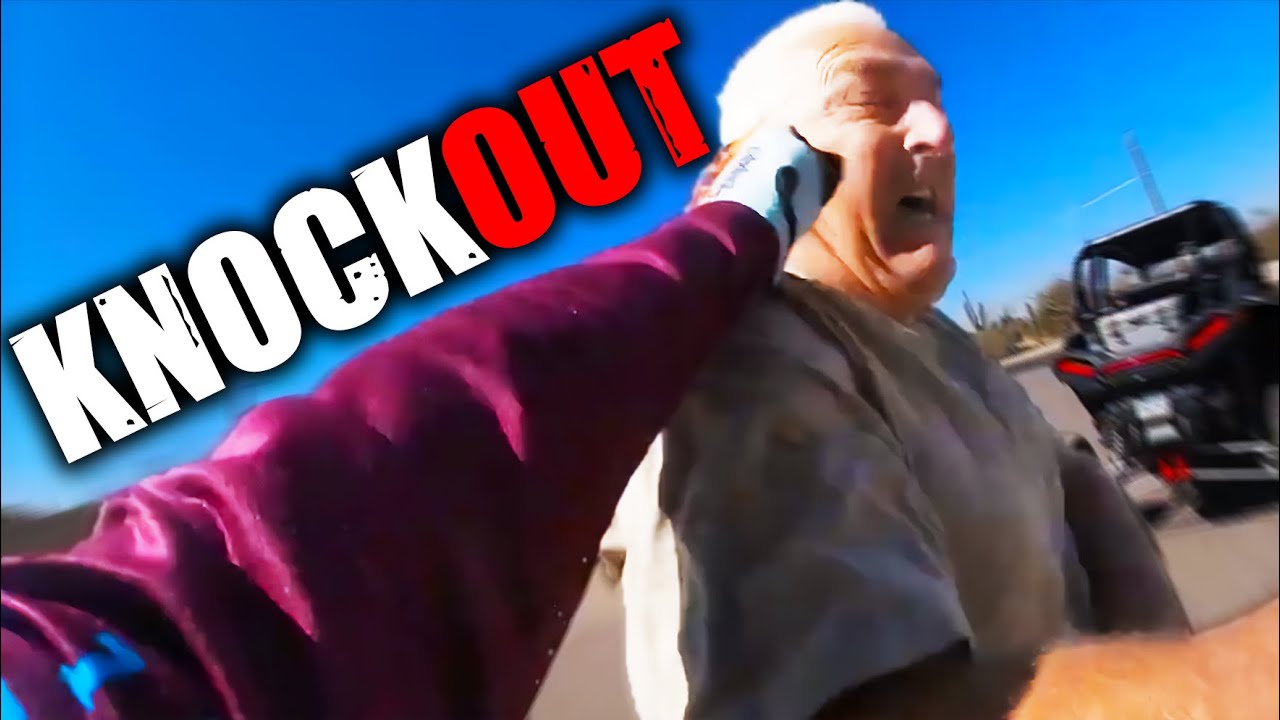
WHEN BIKERS FIGHT BACK! | CRAZY BIKER MOMENTS
Sep 12, 2026
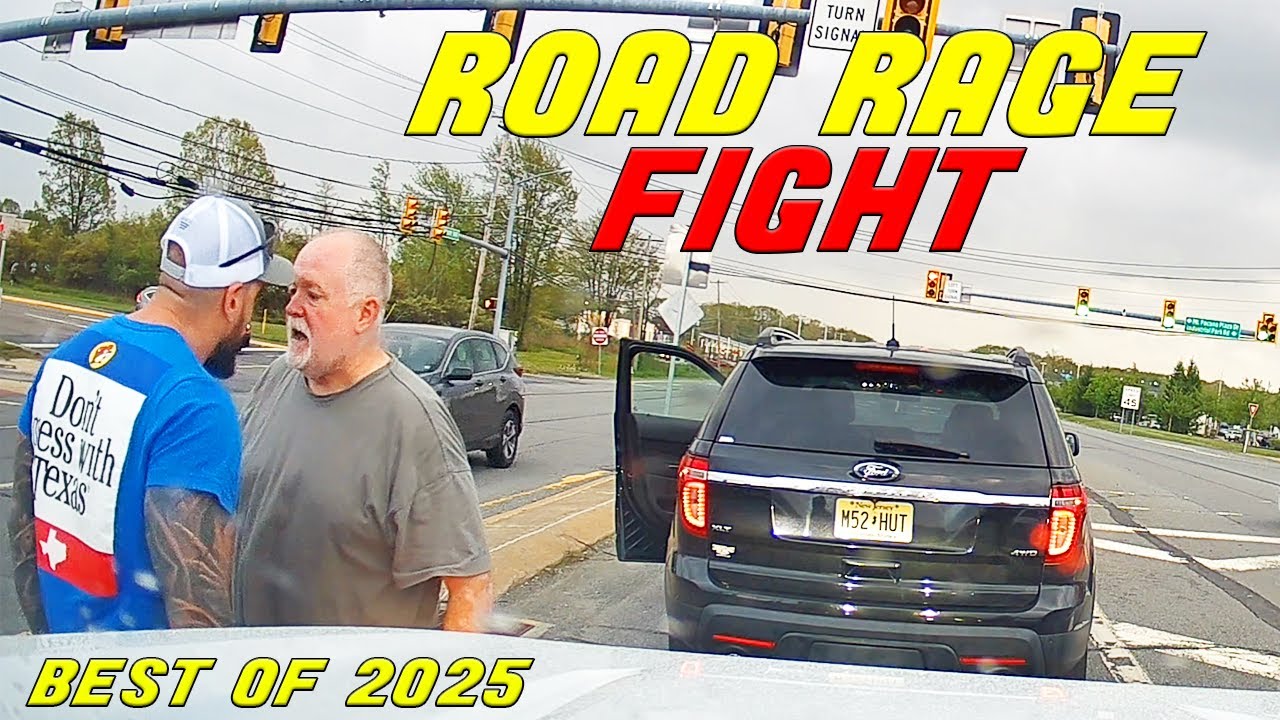
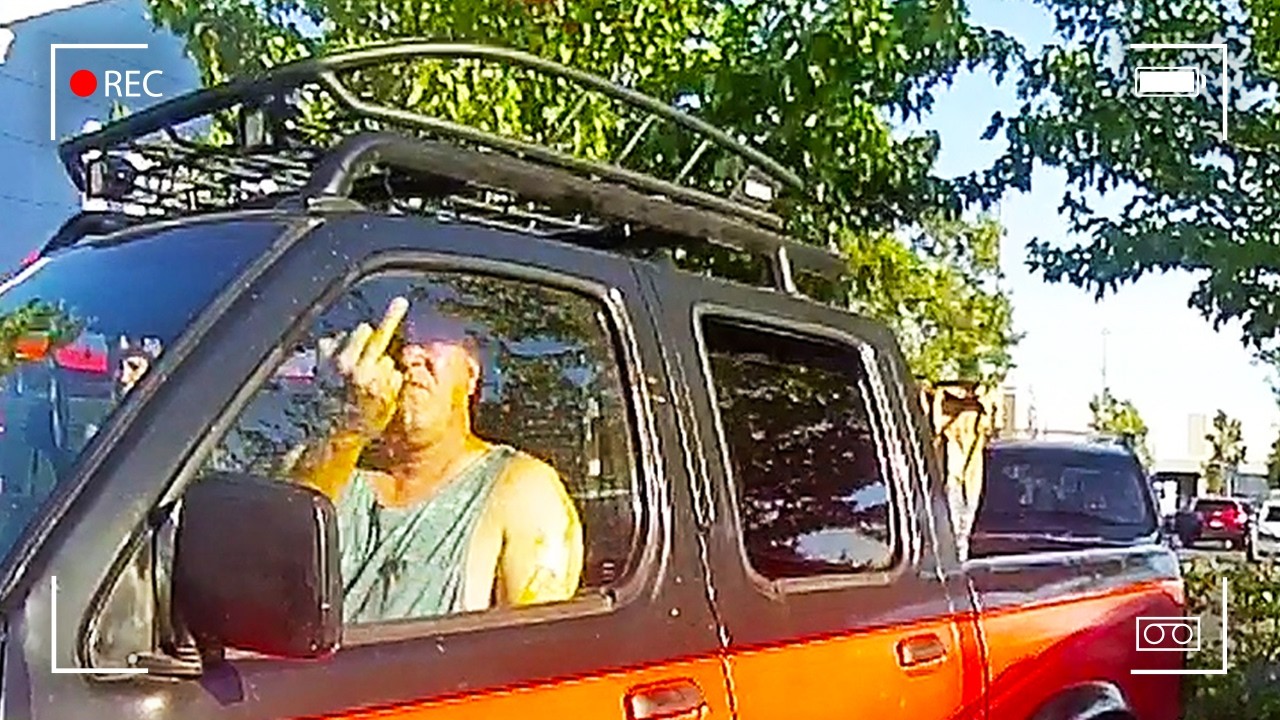
Simple Trespass Incident Takes a Horrifying Turn
Sep 12, 2026